Same Year, Different Truck: The 2004 F-150 Heritage, the 2007 Silverado Classic, and Buying the Right Used Parts
In some years Ford and GM sold two different generations of the same pickup at the same time, so a "2004 F-150" or "2007 Silverado" can mean two different trucks. Here's how that happened and how to get the right used parts the first time.
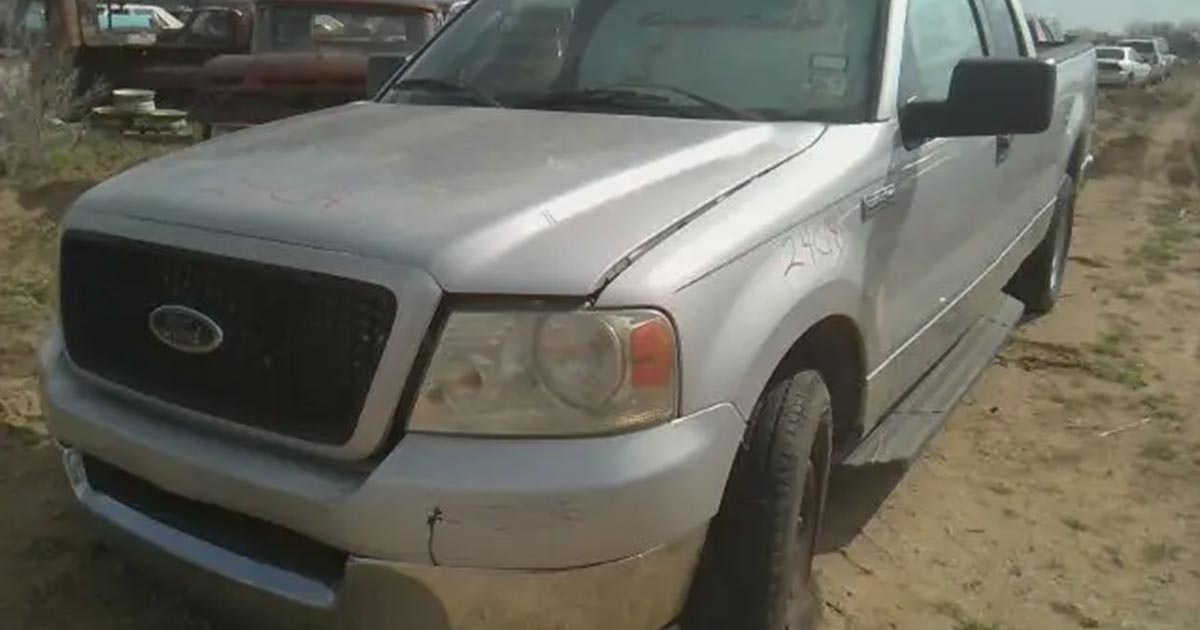
Here's a parts-counter story that happens more than you'd think. Someone needs a headlight for their 2004 Ford F-150. They find one, pay for it, drive home, and it doesn't come close to fitting. The year was right, and so was the make and model. The truck was still wrong.
The reason is a strange bit of pickup history. In a few model years, Ford and GM sold two different generations of the same truck at the same time, with the same model year on the title. If you work on trucks, buy from salvage yards, or are parting out an old pickup, these split years are worth knowing about. They're one of the easiest ways to buy the wrong used part.
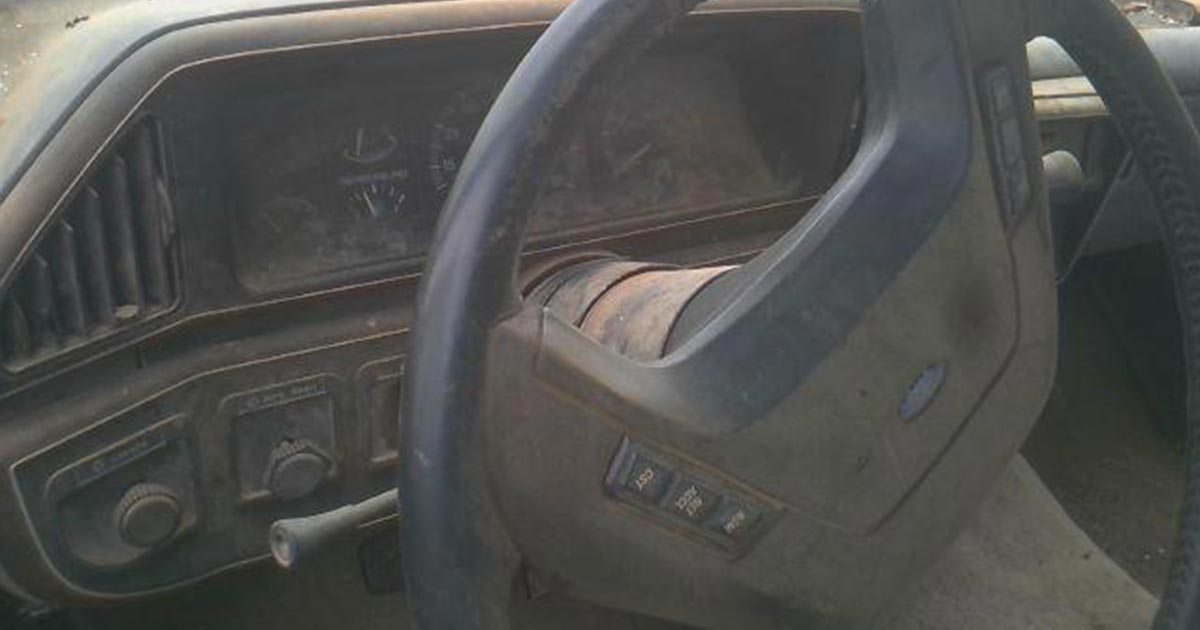
The 2004 Ford F-150 Heritage: last of the old body
Ford's 10th-generation F-150 came out in early 1996 as a 1997 model. Its rounded "aero" styling was a big change, and it sold through the 2003 model year. For 2004, Ford released a fully redesigned 11th-generation F-150 with a new body, a new interior, and a new three-valve 5.4L V8.
Ford didn't stop building the old truck, though. It kept the previous generation on sale as the 2004 F-150 Heritage, a cheaper option next to the new truck. Contemporary coverage gives a few reasons the Heritage made sense:
- Price. When the redesign was announced, Autoweek reported that the carryover trucks would sell at the previous year's prices. Heritage models ran about $19,920 to $29,250, while the new truck started at $22,010.
- The V6. In 2004 the redesigned F-150 came only with V8s. If you wanted the 4.2L V6, you had to buy a Heritage. Ford didn't add a V6 to the new body until the 2005 model year.
- The Lightning. The SVT F-150 Lightning stayed on the old platform for its final 2004 model year.
Forum lore says the Heritage was just leftover 2003 trucks with new badges. The production record says otherwise. The last 10th-generation F-150 came off the line on June 28, 2004, so Ford was still building old-body trucks well into the year. The lineup was cut back, though. The Heritage came in XL and XLT trims, and the SuperCrew body was dropped.
What it means for parts: A 2004 F-150 Heritage is mechanically and structurally a 1997–2003-style F-150. In practice it shares the late-run (2003-era) truck's body panels, engines, and drivetrain. Most parts from a new-body 2004 F-150 will not fit it, and the reverse is also true.
GM did it twice: the "Classic" Silverado and Sierra
General Motors went further. It sold overlapping generations at two separate changeovers and used the same "Classic" name both times.
1999: the first Sierra Classic (GMT400)
GM launched the new GMT800 Silverado and Sierra in August 1998 as 1999 models. That generation also retired Chevy's long-running C/K name. GM kept selling the older GMT400 trucks, now popular as "OBS" (old body style) trucks, next to the new ones for 1999. They were badged as the Chevrolet C/K and the GMC Sierra Classic, mainly to use up leftover parts stock and supply fleet buyers.
These were stripped-down offerings. The 1999 C/K 1500 and Sierra Classic 1500 came only as a three-door extended cab with the 6.5-foot bed, a 5.0L or 5.7L V8, and an automatic. For 2000 the older trucks continued only in heavier 2500 and 3500 versions.
2007: the second Silverado Classic (GMT800)
The all-new GMT900 Silverado and Sierra arrived in late 2006 as 2007 models. Once again GM kept building the outgoing generation, this time the GMT800, and sold it as the 2007 Silverado Classic and Sierra Classic. Regular, extended, and crew cabs were all available, in 1500, 2500, and 3500 versions. The Classic also carried two models the new truck didn't offer yet: the Hybrid and the high-performance SS.
The mechanical differences are significant. The GMT800 Classic kept GM's Gen III small-block V8s. The GMT900 moved to the Gen IV family, which added Active Fuel Management on the 5.3L and 6.0L. The new 1500s also switched to front coil springs and rack-and-pinion steering.
That leaves an odd naming problem. A "GMC Sierra Classic" can be a 1999 OBS truck or a 2007 GMT800, and those are two different generations. Always check which one you're dealing with.
Ford's other split year: the 1997 F-250
Ford had its own version of this in the late '90s. For the 1997 model year, it sold a light-duty F-250 built on the new F-150 platform. You can spot one by its seven-lug wheels. It was sold alongside a heavier-duty F-250 that was still on the previous-generation chassis. If someone lists a "1997 F-250" part, ask which truck it came from.
Why split years trip up used parts buyers
The model year is usually the first filter in any parts search, and in these years it doesn't narrow things down enough. Here's where people get caught:
- Body and lighting: Headlights, grilles, bumpers, fenders, hoods, doors, mirrors, and glass are completely different between generations.
- Interior: Dashboards, clusters, door panels, seats, and HVAC controls usually change with a redesign.
- Engines and engine parts: A 2004 Heritage 5.4L is the older two-valve engine. A new-body 2004 5.4L is the three-valve. A 2007 Classic 5.3L is Gen III, and a 2007 GMT900 5.3L is Gen IV. Sensors, intakes, wiring, and accessories don't always cross over.
- Steering and suspension: Front-end parts, steering gear, and frames are generation-specific.
- Wiring harnesses and modules: Electrical architecture changes with a redesign, so a module that's "right for the year" may not plug in.
Good news for salvage buyers: Because a Heritage or Classic is the old generation underneath, your donor pool is bigger than you might expect. A 2004 F-150 Heritage can usually take parts from a late 10th-generation F-150 (2003 is the closest match). A 2007 Silverado Classic can usually take parts from a late GMT800 (2003–2006 being the closest). Generations still change partway through. Ford freshened the truck in 1999 and added the SuperCrew for 2001, and GM refreshed the GMT800 for 2003. So match the closest years, and confirm fitment for anything trim- or engine-specific.
How to tell which truck you have (or which one the donor was)
Before you buy a part or pull one from a donor vehicle, check these:
- Look at the truck. This is the quickest check. A 2004 Heritage has the rounded 1997–2003 face. The new 2004 F-150 has a taller, squarer grille and different headlights. A 2007 Silverado Classic looks like a 2003–2006 Silverado, while the GMT900 has a squarer body and a steeply raked windshield.
- Read the badges and the paperwork. "Heritage" and "Classic" often show up on the title, registration, original window sticker, or dealer paperwork.
- Use the right catalog entry. Many parts catalogs and pricing guides list the F-150 Heritage, the Silverado 1500 Classic, and the Sierra 1500 Classic as separate models. Pick that entry, not the plain model name.
- Check the engine, not just the year. Match the engine size, and on the Fords, two-valve versus three-valve. Use the VIN engine code with an interchange lookup or the seller's info.
- Ask for photos of the donor. When you buy from a salvage yard or dismantler, ask which body style the donor vehicle was. One photo of the front end settles it.
Tips for buying split-year parts from a salvage yard
- Describe the generation in your request. Don't just say "2004 F-150 headlight." Say "2004 F-150 Heritage (old body) headlight" or "2007 Silverado Classic (GMT800) dash bezel." Sellers will know exactly what you need.
- Search across the years that share parts. For Heritage parts, look at late 10th-generation donors, not only 2004s. For a Classic, include late GMT800 donors.
- Confirm part numbers when you can. If the old part has an OEM number stamped on it, compare it with the donor part before you pay.
- Ask about return policies for electrical parts and modules, where generation mix-ups are most common.
- If you're parting out one of these trucks, say so in the listing. Writing "2004 F-150 Heritage, 1997–2003-style body" or "2007 Silverado Classic, GMT800" helps the right buyer find your parts and cuts down on returns.
Why these trucks still turn up in yards
Full-size pickups are among the most common vehicles in American salvage yards because so many were sold. Ford says the F-Series finished 2025 as America's best-selling truck for the 49th year in a row. GM's Silverado and Sierra are also everywhere. With that many trucks on the road, most old-body donor parts are still out there.
The catch is that split-year trucks were a small slice of production, and a lot of listings label them only by year. Searching by generation, and knowing which neighboring years share parts, is how you find the part that actually fits.
FAQ
Is a 2004 F-150 Heritage the same as a 2003 F-150? Mostly, yes. The Heritage is a carryover of the 10th-generation truck, so body, engine, and drivetrain parts generally match the late 1997–2003 trucks. The lineup was smaller, though, with no SuperCrew and only XL and XLT trims, so check trim-specific parts.
Will parts from a new-body 2004 F-150 fit a 2004 Heritage? Generally no. They're different generations, and most body, interior, engine, and suspension parts don't interchange.
What's the difference between a 2007 Silverado and a 2007 Silverado Classic? The Classic is the older GMT800 truck with Gen III V8s. The regular 2007 Silverado is the redesigned GMT900, with Gen IV engines and, on 1500s, new front suspension and steering.
Is a GMC Sierra Classic a 1999 or a 2007 truck? It can be either. GM used "Sierra Classic" for the older GMT400 trucks sold in 1999 (and heavy-duty versions in 2000), and again for the GMT800 trucks sold in 2007. Check the year and the body style.
Where can I find donor vehicles for these trucks? You can browse donor vehicles or search by make to find matching old-body or new-body trucks.
Find the right truck, not just the right year
With split-year pickups, the model year only gets you partway there. Once you know whether you need a Heritage, a Classic, or the redesigned truck, you're searching the right donor pool.
Ready to look? Browse donor vehicles from salvage yards and dismantlers, search by make to narrow it down, or see how Parting Out works if you want to request a part nobody has listed yet.